There’s a digital transformation happening in South Africa’s financial services sector, and it’s upsetting traditional banks while helping small businesses grow.
More and more business owners rely on fintech in South Africa for anything from reducing working capital burdens to funding a franchise purchase.
Yet the word ‘fintech’ gets used loosely in today’s financial ecosystem. Traditional banks are using the term to describe their service now, while many dubious alternative lenders are emerging.
As a small business owner looking for funding options, you’re probably asking yourself several questions about this topic, including:
– What is a fintech funder, and is it safe for me to use?
– What are the true costs of fintech funding compared to a traditional loan, beyond the headline fee structure?
– Is applying for fintech funding easier than with banks?
This guide compares fintech South Africa lenders against traditional ones on approval criteria, requirements, cost, and fit for your growth stage. By the time you finish, you should have a clear enough picture to make the call that best fits your business.
What is Fintech in South Africa?
Financial technology, or fintech, is a broad term for companies that use software, data and digital infrastructure (like APIs and blockchain) to deliver financial services. Technological advancements enable these fintech funders to operate faster and with fewer barriers than traditional institutions can manage.
Fintech covers areas such as:
- Digital payments
- Digital currencies
- Regulatory technology (regtech)
- Insurance technology (insurtech)
- Products built on artificial intelligence
This guide, however, will focus on the business funding that can help your enterprise. Specifically, what it means if you need capital to manage cash flow and grow operations.
The problem that business owners face is difficult access to funding. Financial inclusion has historically been low for South African small and medium-sized enterprises (SMEs). In 2024, just 33% of South African SMEs reported having access to credit, according to the United Nations Development Programme data. The International Finance Corporation (IFC) estimates that the credit gap for MSMEs in South Africa sits at an estimated R510 billion.
Fintech lenders aim to close that funding gap. With so much funding demand untapped, it’s easy to see why fintech in South Africa is emerging as an important sector. The country counts over 1,500 fintech companies and accounts for 40% of Africa’s entire fintech revenue, according to MD Finance’s 2025 State of Fintech report.
Much of that activity is concentrated in innovation hubs like Cape Town. In 2025 alone, fintech companies in Cape Town raised a combined $335.9 million (around R5.5 trillion) in venture capital, marking a 234% jump year on year.
For business owners, that density of competition is a good thing. It means more purpose-built SME funding in South Africa and real pressure on traditional providers to offer faster approvals, better terms and less paperwork than the next platform.
Is Fintech in South Africa Regulated and Safe to Use?
Legitimate fintech lenders operating in South Africa are licensed and supervised under the country’s Twin Peaks regulatory model. The Financial Sector Conduct Authority (FSCA) governs how financial institutions treat customers. The South African Reserve Bank (SARB), meanwhile, handles broader financial stability.
To ensure regulatory standards are met, the Intergovernmental Fintech Working Group (IFWG) manages a Regulatory Sandbox. This is a formal environment for testing new financial products responsibly, covering lending, digital payments and AI-driven products.
That regulatory landscape governs data handling and cybersecurity obligations alongside conduct standards. Knowing a lender is supervised in this way gives business owners the same baseline consumer protection they’d expect from any formal financial services provider.
Yet, while you can expect a minimum level of regulatory compliance from any South African lender, other aspects of financial services are less guaranteed.
Alternative lenders in South Africa and legacy banks differ on crucial aspects: approval timelines, lending requirements and cost of capital. These all determine which type of funder fits where your business is right now.
Where Traditional Lenders Fall Short for SMEs
For established South African businesses with consistent revenue, the bank funding process often feels built for someone else.
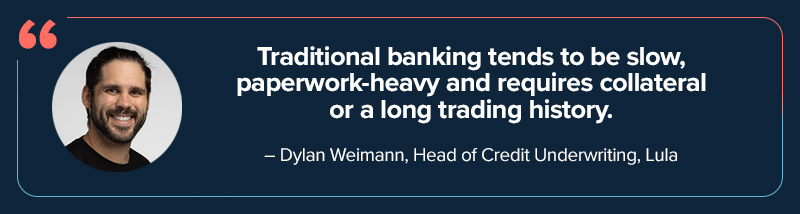
Traditional banking, as Dylan Weimann, Lula’s Head of Credit Underwriting, puts it, “tends to be slow, paperwork-heavy, and requires collateral or a long trading history, which might not reflect current business health.
A growing business looks different on a three-year average than it does on its last six months of bank statements. Yet, traditional lenders work from the former. They want audited financials, tax clearance, fixed asset schedules and properties or assets to pledge.
If the business can’t tick all of those boxes, the answer is usually ‘no’.
The Fintech Funding Model: How it Works
Fintech lenders read your business differently. Instead of solely relying on historical documents and a business credit score, they also take real-time data into account.
Think of your bank statement transaction history, cash flow patterns and how your business is trading right now: that’s what a capable fintech funder will consider.
Weimann explains what that looks like in practice: “Lula uses data and digital processes to understand a business, focusing on cash flow and trading behaviour. This allows us to move faster, reduce admin and offer payment terms that match a business’s current cash flow.”
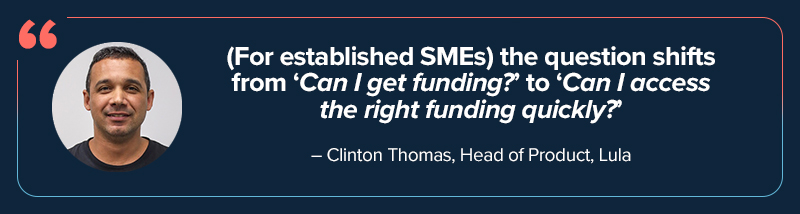
This approach flips the funding process, according to Clinton Thomas, Lula’s Head of Product. “Once an SME has steady turnover, repeat clients, regular cash flow and opportunities, the question shifts from ‘Can I get funding?’ to ‘Can I access the right funding quickly?’”
“Fintech funding is particularly well-suited for SMEs with annual turnover above R500,000, Clinton notes. “Businesses that show clear trading activity but may lack collateral, the time or the appetite for a traditional funding process.”
Lula’s minimum entry requirements follow that logic. Businesses need to have 12 months of consecutive trading history as a registered South African business, a monthly turnover of at least R40,000, and a credit score in good standing. Past that threshold, they base the assessment on how the business is performing now, not what it looked like at inception. Applications are completed online in minutes, and most decisions come back the same day.
Instead of traditional business loans, Lula offers three solutions fine-tuned to different business needs.
– Cash Flow Facility: a pre-approved line of funding you draw down as needed, paying only for what you use.
– Fixed-Term Funding: a lump-sum advance with a fixed repayment period of three, six, nine or 12 months, and no early repayment penalties.
– Secured Funding: For larger capital requirements, Lula offers Secured Funding of up to R20 million, structured by a team of funding specialists to best suit your business.
The underlying principle across these products is the same. “An SME may not need a long-term loan. They may need short-term liquidity to buy stock, pay a supplier or bridge a payment cycle,” says Weimann. “You only pay for the funding that you actually use, enabling a business owner to match repayments to turnover and service the funding easily.”
That approach – paying for what you use, when you use it – is the clearest practical difference between fintech funding and a traditional fixed-term loan. The table below maps out the full business loan comparison in South Africa.
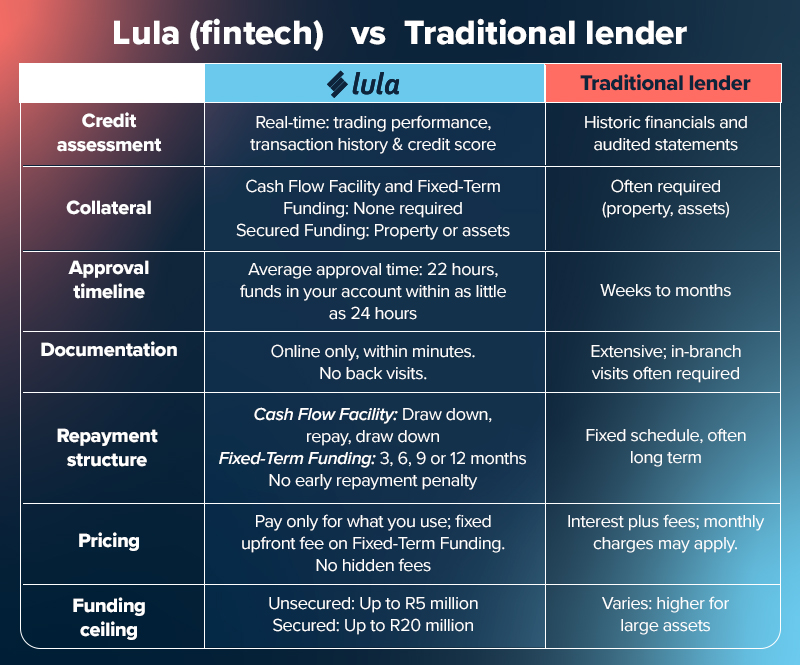
No model wins across every dimension. Instead, it comes down to working out which works best for your business. “It’s not just about ‘traditional versus fintech,” Weimann notes. “It’s about finding the right fit.”
The stories below show what that looks like when businesses find that funding fit.
What Fintech Funding Looks Like in Practice
When timing matters, the difference between the two models is most visible.
Manyene Holdings, a Cape Town-based security and construction company, had experienced drawn-out processes and non-responses from commercial lenders before turning to Lula. “The process for application was extremely easy, and within a couple of hours, we were approved,” says co-founder Theresa Ward.
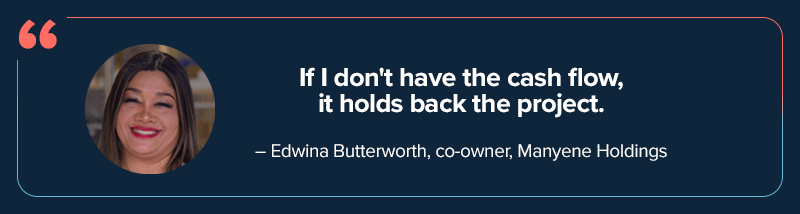
“If I don’t have the cash flow to order the stock or equipment, it does hold back the project,” adds co-founder Edwina Butterworth. With Lula’s help, her business has since grown from two to 50 employees.
For businesses with recurring cash flow gaps – stock purchases, payroll timing, supplier payments – speed of access is the whole point. That’s why Allistair Bunding, owner of sportswear manufacturer Sports and Corporate, partnered with Lula for his funding needs.
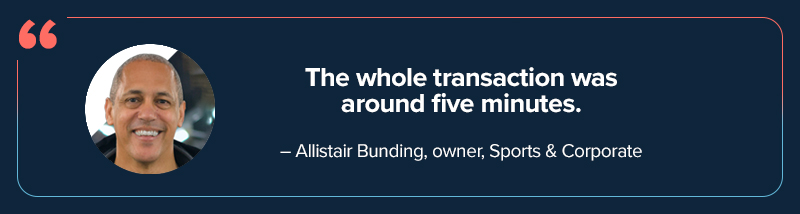
“You don’t want to be telling your staff on a Friday, ‘Sorry, we can’t pay you,” Bunding admits. In funding that cash flow gap, Bunding saw “how brilliant the Lula relationship was”. The business owner adds that “the whole transaction was done in around five minutes”.
Find the Business Funding that’s Right for You
How to choose a business funder comes down to where your business is right now and what it needs next. With banks and fintech startups in South Africa, there’s no one-size-fits-all.
A traditional lender might be the best option if you’re looking at a major capital expenditure with a multi-year repayment runway.
Fintech funding is likely the better fit if your business has been trading for at least a year with consistent revenue, and you need capital quickly to manage cash flow or act on a growth opportunity.
That’s exactly what Lula was built for. Since 2014, Lula has helped over 25,000 South African businesses access fast, flexible funding. These businesses have together received over R13 billion in funds to stabilise cash flow and grow operations.
The right funding partner means you can act on opportunities as they arise, not after the moment has passed. If you know your business is worth backing, Lula does too.